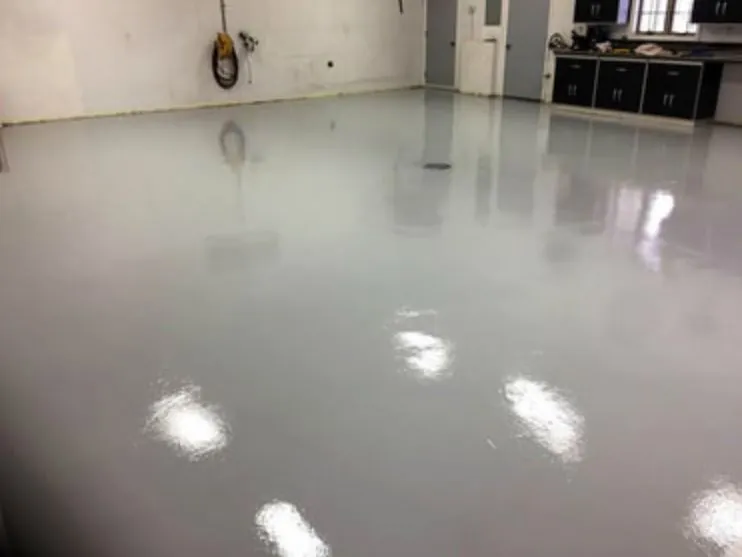
A professionally installed residential epoxy floor in Tampa lasts roughly 10 to 20 years. Commercial floors under heavy traffic last about 5 to 10 years. A cheap or poorly prepped floor can fail in 1 to 3 years — and in Tampa, moisture is usually what kills it first.
It is the most common question we get before a job and the most disappointing one after a bad one: how long is this floor actually going to last? The honest answer is that there is no single number, because an epoxy floor's lifespan is decided less by the resin in the bucket and more by what happens to the slab underneath it. The same flake system can last two decades or two years depending on prep, climate, and the topcoat on top of it.
This guide lays out realistic lifespans for each system, explains what Tampa's high water table, humidity, and sub-tropical sun do to a coating over time, and shows you how a properly built floor reaches the top of its range. At Ascent Epoxy Tampa, the floors we install are designed to last in this climate specifically — not in a dry inland garage where the rules are different. Want a number for your slab and the system built to outlast it? Call (813) 694-5986, or read on first.
The Short Answer
Here is the quick version before we get into the detail. A residential epoxy floor that was installed correctly — diamond grind, moisture testing, a quality coating system, and a UV-stable topcoat — should last 10 to 20 years in a Tampa home before it needs more than a refresh. A commercial or industrial floor taking forklift traffic, dropped tools, and constant cleaning will sit lower, around 5 to 10 years, simply because it absorbs far more wear.
At the other end is the floor that fails fast. A consumer DIY kit rolled over an unprepped, untested slab in this climate can blister, peel, or delaminate within 1 to 3 years. That gap — two decades versus two years — is almost entirely about preparation and whether the floor was built for Tampa's moisture and heat. The system you pick sets the ceiling; the prep decides whether you ever reach it.
Typical Lifespan by System
Different epoxy systems wear at different rates, and the topcoat matters as much as the base. The table below shows realistic lifespan ranges for the systems we install most often in Tampa, split by how the floor is used. These assume a professional install with proper prep — that is the entire point of the ranges.
| System | Residential Lifespan | Commercial / Heavy Traffic |
|---|---|---|
| Solid Color | 10–15 years | 3–7 years |
| Flake / Chip | 15–20 years | 5–10 years |
| Metallic | 10–15 years | 5–8 years |
| Quartz | 15–20+ years | 8–15 years |
| Polyaspartic Topcoat | Adds years to any base; UV-stable, humidity-tolerant | Adds years to any base; UV-stable, humidity-tolerant |
A few things to read out of that table. Flake and quartz last longest because the broadcast media builds a thicker, tougher wear layer that takes the abuse before the resin does. Metallic sits a touch lower not because the resin is weaker but because the decorative layer is part of the look — once it wears, you notice. And the polyaspartic line is the one to pay attention to in Tampa: it is not a base system on its own, it is the topcoat that protects whatever is underneath it. A UV-stable polyaspartic or polyurea topcoat is what pushes a Tampa floor toward the top of every range above, because it handles the humidity and sun that a plain epoxy topcoat will not.
What Shortens an Epoxy Floor's Life in Tampa
Most floors that fail early in the Tampa Bay area do not wear out from honest use. They are killed by conditions the installer either ignored or was not equipped to handle. Here are the culprits, roughly in the order they cause trouble in this market.
Moisture and Vapor Transmission
This is the number one floor-killer in Tampa, and it is invisible until it is too late. The Tampa Bay area sits on a high water table, and many slabs push moisture vapor up through the concrete around the clock. When that vapor has nowhere to go, it builds pressure under the coating and forces it off the slab from underneath — bubbling, blistering, and finally delaminating. No topcoat can save a floor that is failing from below. This is moisture vapor transmission, and it is why we test and mitigate before coating. For the full breakdown of how it happens and the test that prevents it, read our Tampa moisture failure guide.
UV Ambering and Chalking
Sub-tropical sun is brutal on coatings that are not UV-stable. A standard epoxy topcoat exposed to direct sunlight — through an open bay door or on a sun-lit interior — will amber, yellow, and eventually chalk on the surface. It is a cosmetic failure rather than a structural one, but it is the reason a floor that was glossy white at install looks dingy and faded a couple of years later. A UV-stable polyaspartic topcoat resists it; a cheap epoxy clear does not.
Heat and Hot-Tire Pickup
Florida heat keeps garage slabs warm and tires hot. When a hot tire sits on a soft or poorly bonded coating, it can grab the surface and lift it as the car pulls away — that is hot-tire pickup, and it leaves bare patches where the coating used to be. A properly cured, well-bonded system with the right topcoat resists it; a thin DIY coating is exactly where you see it most. Heat also stresses the cure itself, which is part of why we use humidity- and heat-tolerant topcoats here.
Poor Prep and No Topcoat
Underneath all of it is preparation. A coating bonds to concrete only when the slab has been opened up with a diamond grind — an acid wash or a quick scuff does not create the profile epoxy needs to grip. Skip the grind and the floor is living on borrowed time no matter how good the resin is. The same goes for skipping a protective topcoat: the wear layer is what takes the abuse, and a floor without one wears straight through to the decorative coat and then the concrete. Cut-rate installs cut exactly these corners, which is why they fail first.
What Makes a Floor Last Longer
The good news is that every failure above is preventable, and the fixes are the same ones that push a floor to the top of its lifespan range. A long-lasting Tampa floor is not luck — it is a sequence of decisions made before and after the coating goes down.
- A full diamond grind. Mechanically profiling the slab is the single most important step for adhesion. It is what lets the coating lock into the concrete instead of sitting on top of it. Every floor we install starts here.
- Moisture testing and mitigation. Testing the slab before quoting tells us whether vapor transmission is a threat. When it is, a moisture-mitigation primer goes down first to seal it off, which is the only reliable way to stop the failure-from-below that ruins Tampa floors.
- A UV-stable polyaspartic topcoat. This is the layer that takes the wear and shrugs off the sun. Polyaspartic and polyurea topcoats cure fast, tolerate humidity, and resist yellowing — the exact properties a floor needs to survive this climate looking new.
- Routine maintenance. Sweeping grit, wiping spills, using furniture pads, and keeping a parking mat under hot tires all extend the wear layer's life. A maintained floor reaches the top of its range; a neglected one does not. Our Tampa epoxy maintenance guide walks through the simple routine that keeps a floor looking new.
Notice that three of the four happen before the first coat is ever applied. That is the core truth of epoxy durability: most of a floor's lifespan is decided during installation, not during use. A floor built right for Tampa is one you stop thinking about for fifteen years or more.
Want a Floor Built to Last in Tampa?
Every install starts with moisture testing and a diamond grind — the prep that decides whether a floor lasts two years or twenty. Get a real number for your slab, free.
Residential vs. Commercial Lifespan
The biggest single factor in how long a floor lasts — after prep — is how hard it gets used. A garage floor and a warehouse floor can be the exact same system and live very different lives, which is why the ranges split the way they do.
A residential garage or interior floor sees foot traffic, a couple of vehicles, the occasional dropped tool, and not much else. With a quality flake or quartz system and a UV-stable topcoat, that floor comfortably reaches 15 to 20 years before it needs anything more than a recoat. Homeowners are often surprised how little a properly built floor asks of them over that span.
A commercial or industrial floor is a different animal. Forklifts, pallet jacks, heavy point loads, dragged equipment, chemical exposure, and daily scrubbing all compress the timeline. Those floors typically run 5 to 10 years before a recoat or rebuild, and the spec usually moves toward a thicker quartz or industrial system to buy back as much of that life as possible. It is not that the coating is worse — it is that a warehouse puts ten years of home-garage wear on a floor in one. The honest expectation matters: a commercial floor is a maintenance item on a cycle, not a one-and-done install.
Signs Your Floor Is Wearing Out — and What to Do
An epoxy floor rarely fails all at once. It gives you warning signs, and catching them early is the difference between a low-cost recoat and a full tear-out. Here is what to watch for.
- Dulling or loss of gloss. The first sign, and the most benign. The topcoat is wearing thin from foot traffic and cleaning. This is a recoat candidate, not a replacement.
- Light scratches and traffic patterns. Visible wear lanes where people walk or cars park mean the wear layer is doing its job — and is ready for a fresh topcoat to reset it.
- Yellowing or chalking. Usually a sun-exposed, non-UV-stable topcoat ambering. Cosmetic, and again a recoat fixes it — ideally with a UV-stable topcoat this time.
- Bubbling, blistering, or peeling. This is the serious one. It signals moisture pushing from below or a bond failure, and it cannot be topcoated over. The failed coating has to come off and the floor rebuilt.
Recoat vs. Replace
The dividing line is simple: is the base system still bonded to the slab? If the only problem is a worn, dull, or yellowed topcoat and the floor underneath is sound, an installer can scuff-sand the surface and lay a fresh topcoat. That restores the gloss and resets the wear clock for a fraction of the cost of a full install — and it is exactly why a maintained floor can outlive its nominal range with one mid-life recoat.
If the floor is bubbling, blistering, delaminating, or lifting from moisture, recoating will not help, because the foundation has failed. In that case the failed coating has to be removed, the slab properly re-prepped and — critically in Tampa — moisture-mitigated, and a new system installed. The good news is that a correctly rebuilt floor starts its full lifespan over again. If you are seeing the serious signs, the smart move is to have it looked at before it spreads. We can tell you on a walkthrough whether you are looking at a quick recoat or a rebuild — just request a free assessment.
Frequently Asked Questions
How long does an epoxy garage floor last?
A professionally installed residential epoxy garage floor in Tampa typically lasts 10 to 20 years before it needs a recoat or replacement. The range is wide because it depends almost entirely on slab preparation, whether moisture was mitigated, and the quality of the topcoat. A diamond-ground floor with a UV-stable polyaspartic topcoat sits at the top of that range; a thin DIY kit rolled over an unprepped slab can fail in 1 to 3 years.
Do epoxy floors come with a warranty?
Most professional epoxy floors carry two separate things: a manufacturer's warranty on the coating product itself and a workmanship warranty from the installer covering the labor and bond. Length varies by the product line and the contractor, so ask your installer to put the workmanship warranty in writing and confirm it stays valid in Florida's humidity. A warranty is only as good as the prep behind it.
Why did my epoxy floor fail so quickly?
Premature epoxy failure in Tampa almost always traces back to one of three things: no diamond grind, so the coating never bonded to the concrete; no moisture mitigation, so vapor from the high water table pushed the coating off from underneath; or no UV-stable topcoat, so the sun ambered and chalked the surface. A big-box DIY kit skips all three, which is why those floors peel within a year or two here.
Can an epoxy floor be recoated instead of replaced?
Yes. If the base system is still bonded and the only problem is a worn or dull topcoat, an installer can scuff-sand the surface and apply a fresh topcoat, restoring the gloss and resetting the wear clock for a fraction of a full replacement. Recoating only works when the foundation is sound. If the floor is delaminating, bubbling, or lifting from moisture, the failed coating has to come off and the floor must be rebuilt.
Does Tampa humidity shorten an epoxy floor's lifespan?
It can, but only when the floor was not built for it. Tampa's high water table, roughly 75 percent humidity, heat, and sub-tropical UV are hard on coatings that were not prepped for the climate. A floor installed with moisture testing, a vapor-mitigation primer when needed, and a UV-stable polyaspartic topcoat handles those conditions for the full 10 to 20 year range. A floor without that prep is where humidity does its damage.
How can I make my epoxy floor last longer?
Start with the install, because most of a floor's lifespan is decided before the first coat goes down: a diamond grind, moisture testing with mitigation when needed, and a UV-stable topcoat. After that, basic maintenance does the rest. Sweep grit, clean spills, avoid dragging sharp metal, and apply furniture pads or a parking mat under hot tires. A maintained, well-built floor reaches the top of its lifespan range.
Get Your Free Tampa Quote
The only way to know how long a floor will last in your space is to look at the slab it is going on. At Ascent Epoxy Tampa, every estimate starts with a real look at your concrete, moisture testing, and an honest conversation about the system — and the prep — that will get you to the top of the lifespan range. If you already have a floor showing wear, we will tell you straight whether it is a recoat or a rebuild. Curious what your finished floor would look like first? Try our Floor Studio to preview sizes, finishes, and colors before you call.
Ready to start? Call us at (813) 694-5986 or request a free quote online. We serve Tampa, Brandon, Riverview, Carrollwood, Wesley Chapel, Westchase, Lutz, Land O' Lakes, and the surrounding communities across Hillsborough and Pasco County.
Related Articles
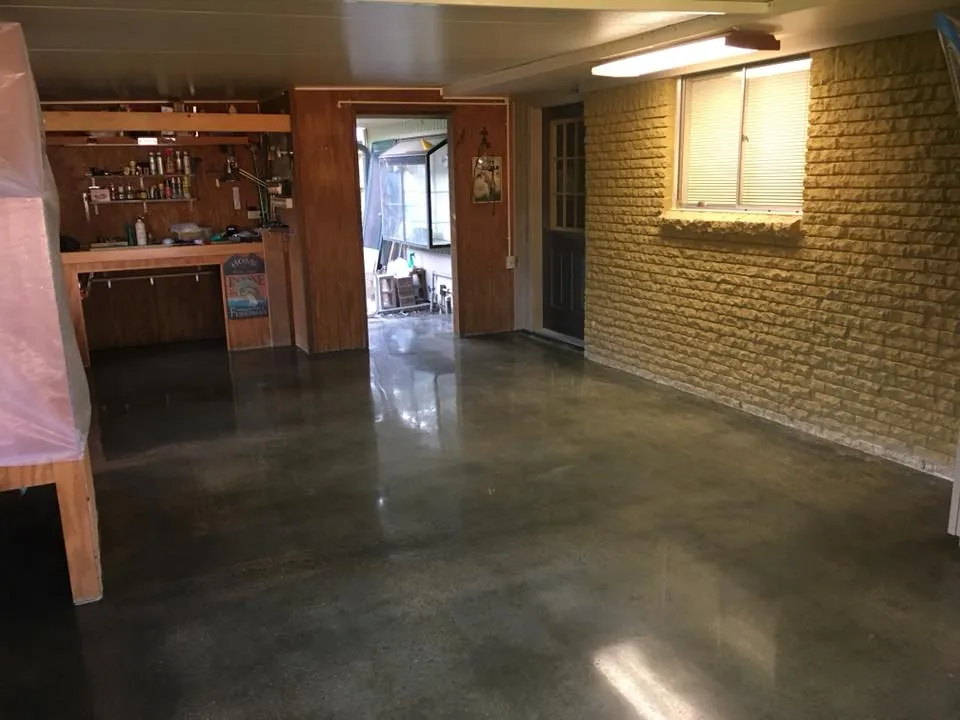
How to Maintain an Epoxy Floor in Tampa
Keep your floor looking new with the right cleaning routine.
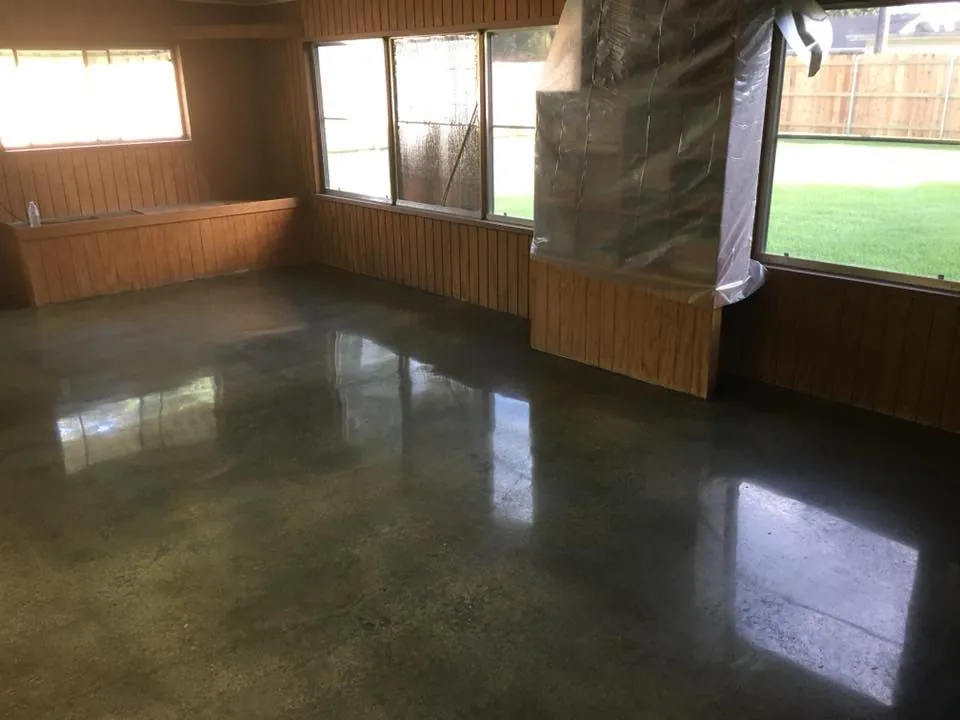
Why Epoxy Floors Fail in Tampa — and the Moisture Test That Prevents It
The high water table, MVT testing, and what to ask before you sign.
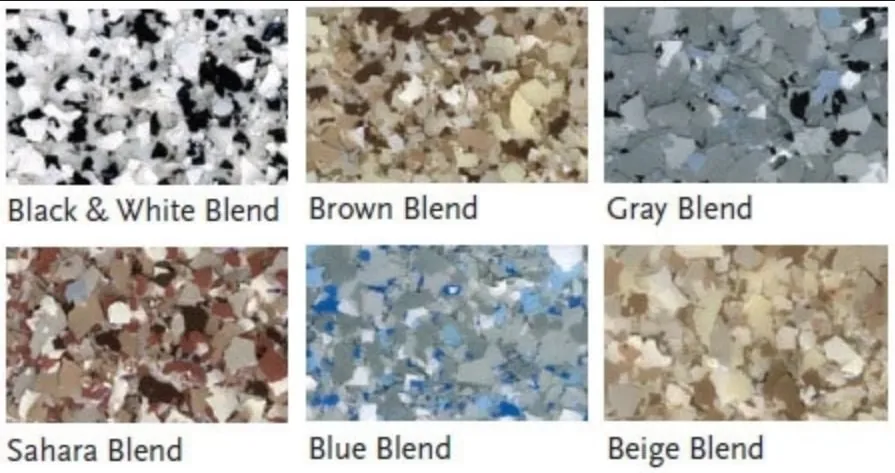
How Much Does Epoxy Flooring Cost in Tampa? (2026 Guide)
Real 2026 Tampa prices by finish plus a typical 2-car garage total.