Garage Floor Epoxy in Tampa — Coated for a Working Bay City
From a MacDill commuter's daily driver to the contractor truck and the boat-on-a-trailer, Tampa garages take a beating — hot tires off I-275, oil and hydraulic drips, and Gulf humidity working the slab from below. We lay a hot-tire-proof flake or metallic floor. Most one- and two-car bays wrap in a day.
Want to talk to the installer? During business hours we can put you through on the same call.
What’s included
A Tampa Garage Works as Hard as the City Around It
This is a port-and-industry town. Trucks run the Port of Tampa logistics lanes, scrubs commute to the Moffitt and USF medical corridor, technicians clock in at the light-manufacturing shops out toward Brandon and Plant City, and on the weekend half of Hillsborough hooks a boat to the hitch and heads for the Gulf. All of that activity ends up parked over one slab: your garage floor. It is where the oil change happens, where the cooler and the dive gear get rinsed off, where the work truck drips after a long haul up I-4 — and bare concrete soaks every bit of it in.
Two things make that slab fail faster here than the brochure photos suggest. First, a lot of Tampa Bay homes sit on sandy coastal fill, so the concrete was poured over loose, fast-draining ground and tends to wick Gulf humidity up through the surface for months at a time. Second, that radiant Tampa heat puts tires rolling in off the interstate well past the point where a hardware-store roll-on kit can hold — the result is hot-tire pickup and moisture-driven peeling, the two most common reasons a cheap garage coating lifts within a season. A floor built for this city has to answer both.
That is why we treat the slab before we ever open a pail of resin. Every garage starts with diamond grinding to open the pores for a true mechanical bond, crack and control-joint repair, and a high-solids flake or metallic body coat sealed under a UV-stable topcoat — the layer that takes the heat, the oil, and the salt-air haze and still wipes clean with a mop. The payoff is a 10-to-30-year floor that turns a humid catch-all into the cleanest room in the house. It is the same coating chemistry we run on interior living spaces and our commercial shop floors, tuned harder for a vehicle bay. We coat garages across Tampa, Brandon, Riverview, Carrollwood, and the rest of Hillsborough — see what sets the price in the Tampa cost guide.
Searching for a garage floor coating company near you? If you're anywhere in the Tampa metro — Brandon, Riverview, Carrollwood, Wesley Chapel, Lutz, or Land O' Lakes — you're inside our daily install radius. Duane quotes and coats garage floors across Hillsborough and south Pasco every week.
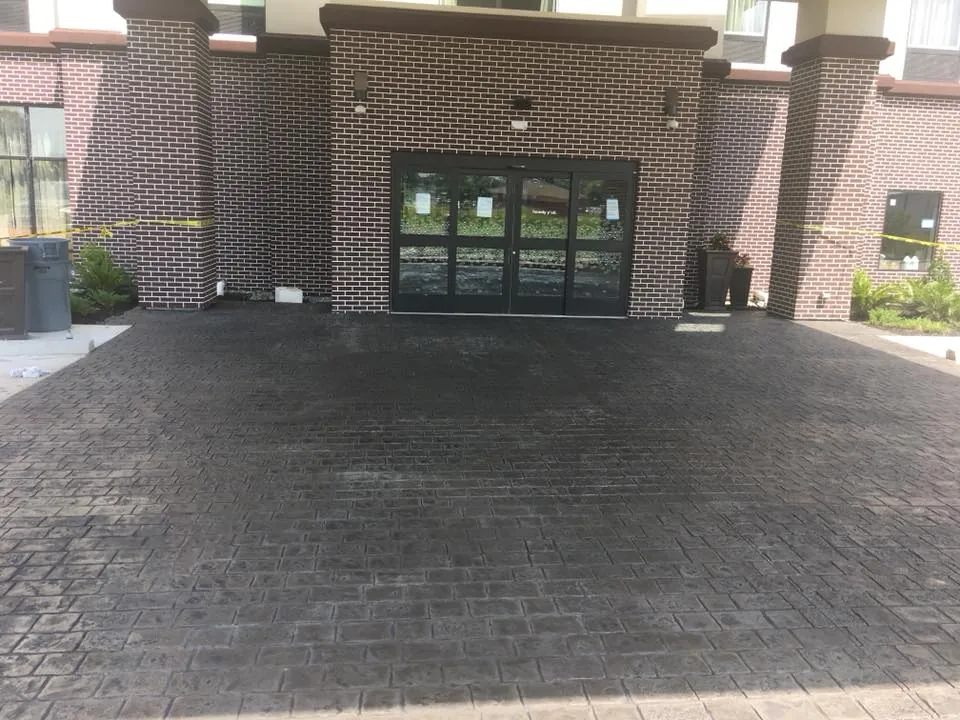 Before
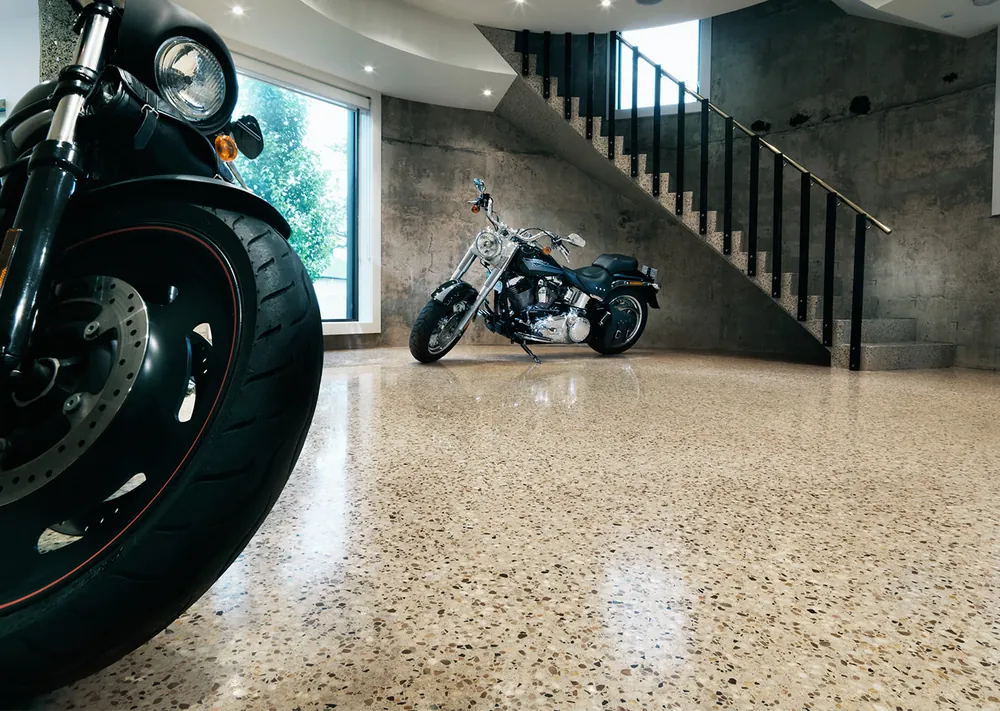 After
After
What a Coated Garage Floor Holds Up To in Tampa
Hot tires off I-275, dripping work trucks, weekend boat gear, and a slab breathing Gulf humidity — six things bare concrete can't survive, and a flake or metallic floor can.
200°F
Hot Tire Resistant (200°F+)
A daily driver coming off I-275 or the Selmon Expressway in August parks tires hot enough to lift a cheap kit. Our topcoat is built to take that load without pickup or peeling.
Why Florida heat matters →0 stains
Stain-Proof Surface
Work-truck oil, hydraulic fluid, brake dust, battery acid, even the saltwater off a trailered boat — all of it wipes off a sealed, non-porous floor instead of soaking into raw concrete for good.
Anti-Slip
Walk Safely on Wet Floors
Between summer downpours and the water you bring back from the Gulf, a Tampa garage floor is wet a lot. Broadcast flake and anti-slip additives in the topcoat keep it gripped underfoot.
10–30 yrs
10-30 Year Lifespan
With true diamond-grind prep, many bays here run 20 to 30 years before a recoat.
How humidity affects durability →5 min
5-Minute Maintenance
Sweep out the sand, mop the salt haze, done. No resealing, no waxing, no re-staining — the seamless surface has no joints or pores for Tampa grit and humidity to settle into.
Resale
A Move-In-Ready Detail
In a fast-moving Tampa Bay housing market, a finished, move-in-ready garage is a detail buyers remember. A coated floor like this reads as a well-maintained home when it is time to sell.
See the full cost guide →Five Steps, Built Around a Humid Bay-City Slab
The diamond grind is the step cut-rate installers skip — and the one a sandy-fill Tampa slab needs. Here is the full sequence, from free consultation to a floor you can park on.
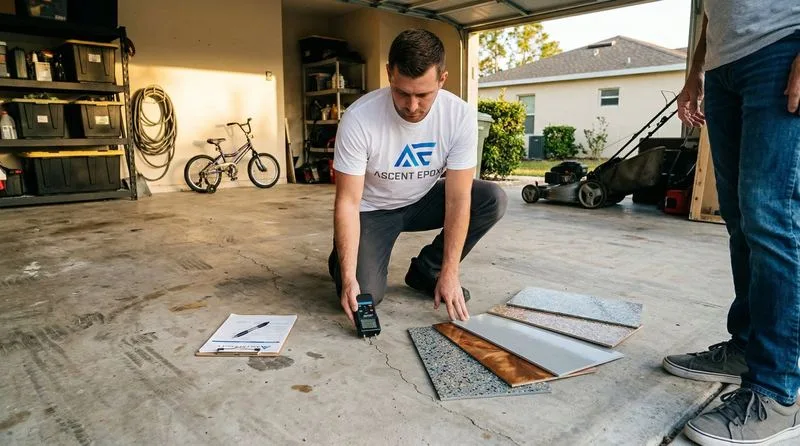
Free Consultation
~45 minOur installer or a crew lead comes to your Tampa garage, measures the bay, reads the slab, and shows you flake and metallic samples in your own light. You leave with a written quote, not a ballpark guess. Schedule yours free.
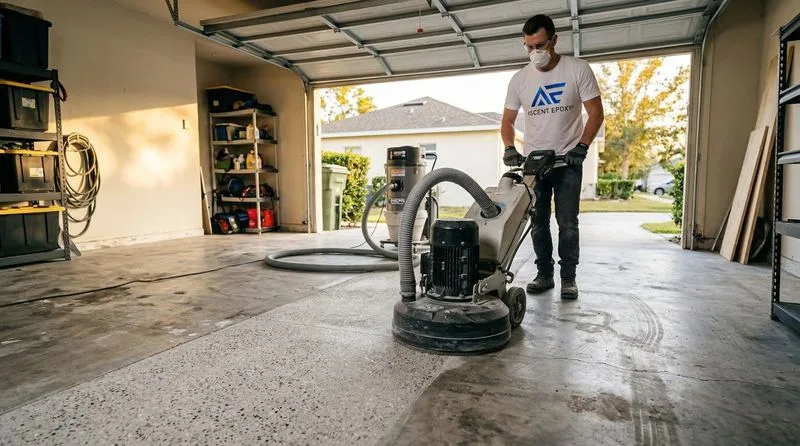
Surface Preparation
2–4 hrsDiamond grinding cuts back the slick top layer of the slab so the coating bonds into the concrete, not just onto it.
Crack & Joint Repair
30–60 minCracks, spalls, and control joints get packed with semi-flexible filler and ground flush. Done right, the old cracks never telegraph back up through the finished coating. Repair of most cracks is free; a major crack is a small extra fee.
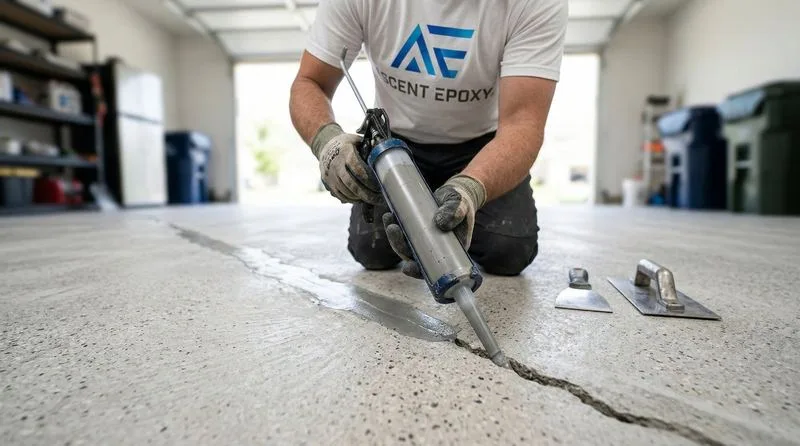
Multi-Coat Application
3–5 hrsWe lay a high-solids epoxy body coat broadcast with flake or metallic pigment and seal it under a UV-stable topcoat built to shrug off hot tires and Gulf-coast sun.
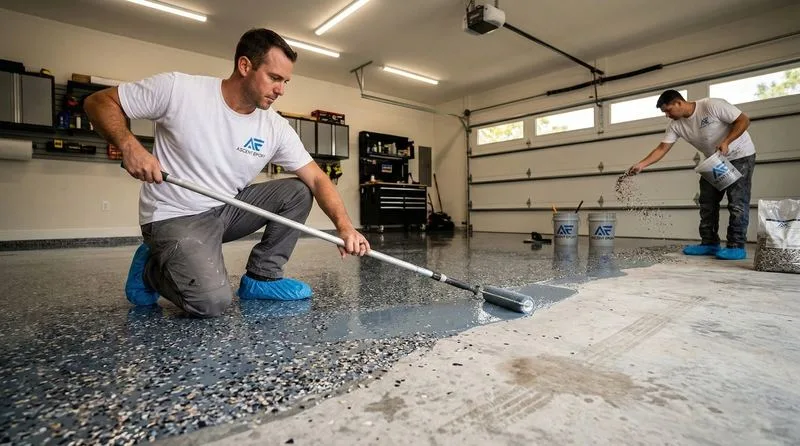
Cure & Enjoy
5–7 daysYou can walk on it in about 24 hours and park the truck back in after 5 to 7 days of cure. Before we leave, our crew hands you a plain-language written care guide — the simple sweep-and-mop routine that keeps a Tampa floor looking new for years.
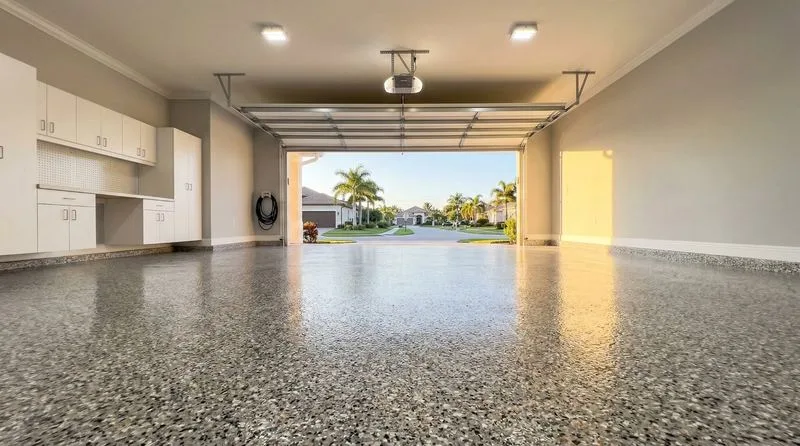
Ready to Start? Step 1 Is Free.
Schedule your no-obligation consultation and see finish samples in your space.
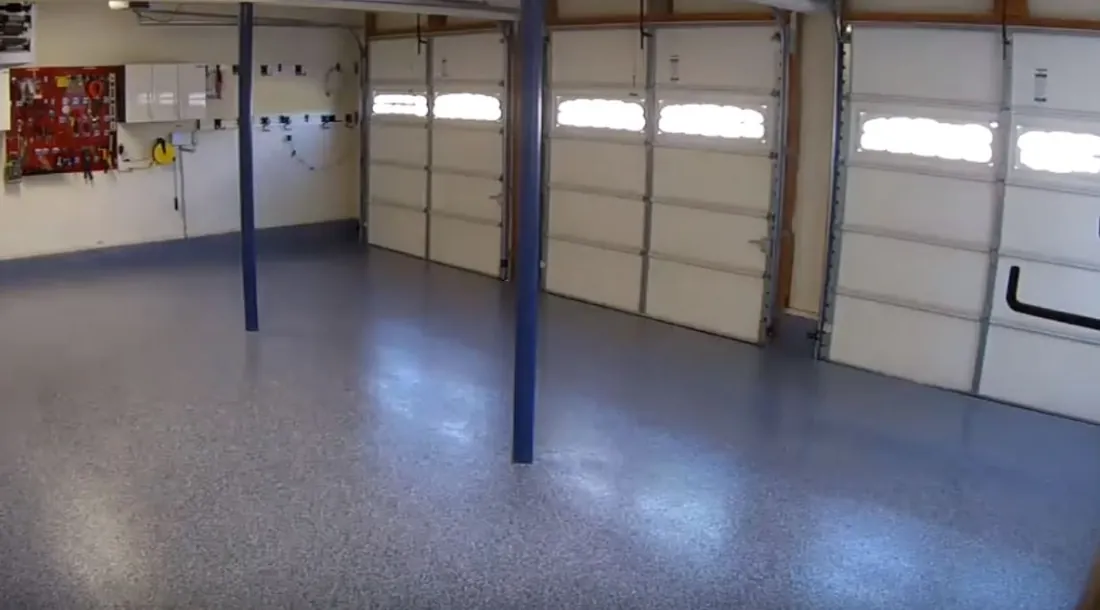
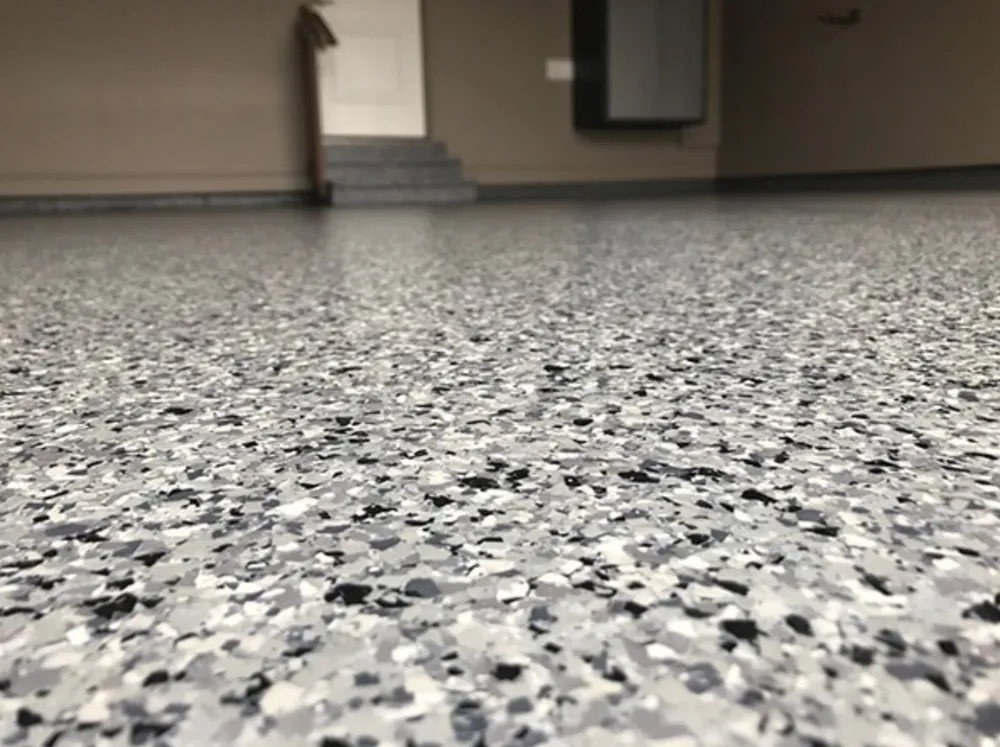
Garage Floors Like the Ones We Coat
Flake and metallic floors like the ones we lay on Hillsborough slabs — from Carrollwood two-car bays to work-truck garages out by the port.
Garage Epoxy FAQs — Tampa
Answers to the most common questions Tampa homeowners ask about garage floor epoxy.
The price of a Tampa garage floor depends on the size of the garage, the condition of the slab (cracks, old coatings), and the coating system you choose (solid color, decorative flake, or metallic). Call (813) 694-5986 or request a free estimate to get an exact price, with no obligation. Our Tampa cost guide explains each factor.
Tampa's regional humidity averaging around 75%, combined with a high water table under most Hillsborough slabs, makes moisture testing and proper surface preparation critical for a lasting garage epoxy floor. Moisture vapor drives up through the concrete and, if it is trapped under the coating, causes epoxy to bubble, peel, or delaminate within months of installation.
Garage epoxy floors in Florida last 10 to 30 years when installed with proper surface preparation and moisture testing. The wide range depends on the coating system used, the quality of prep work, and how the garage is used. High-solids epoxy base coats paired with UV-stable topcoats deliver the longest service life because they resist UV yellowing, hot-tire pickup, and chemical exposure better than entry-level systems.
Yes, you can park on your new epoxy garage floor after a 5 to 7 day full cure period. Light foot traffic is typically safe within 24 hours of the final coat, and you can place objects on the surface after 48 to 72 hours. Our professional-grade epoxy topcoats are formulated to resist hot-tire pickup, so you will not see marks or peeling from parking warm vehicles on the surface.
October through April is the best time to epoxy a garage floor in Tampa. Lower humidity and cooler temperatures during these months create ideal conditions for epoxy adhesion and curing. Concrete surface temperatures between 50°F and 90°F are optimal for most epoxy systems. Summer installations are still possible but require additional climate control measures, such as dehumidifiers and fans, to manage moisture and heat during the application and cure stages.