Industrial Epoxy Flooring in Tampa — Built for the Port, Plants & Med Corridor
Chemical-resistant, forklift-rated, washdown-grade floor systems for the cargo warehouses behind Port Tampa Bay, the food-and-beverage and light-manufacturing plants of Hillsborough, and the lab and processing spaces around the USF–Moffitt medical corridor — engineered for sandy fill and Gulf humidity.
Floors Built for How Tampa Bay Actually Works
Tampa's industrial base doesn't look like a single warehouse belt — it runs in three lanes. Cargo moving through Port Tampa Bay and Tampa International's freight side lands in distribution and 3PL warehouses; food, beverage, and produce cycle through processing rooms and cold storage; and a steady stream of labs, sterile-processing rooms, and equipment shops feed the USF, Moffitt, and Tampa General medical corridor north and east of downtown. Each of those rooms abuses a floor a different way, and none of them is served by the showroom-grade commercial epoxy flooring a retail bay or office uses.
Add the contractor-heavy world of Tampa's light manufacturing — fabrication shops, beverage and craft-brewing rooms in the Ybor and Channelside districts, fleet maintenance bays, and equipment yards around the MacDill side of the bay — and you get a metro where industrial flooring has to span everything from a 400-square-foot wash bay to a slab that runs past 50,000 square feet. On the big ones, the prep is the whole job: we phase the work so a single bay cures while the rest of the operation keeps shipping.
What ties all of it together is what sits under the concrete. Much of Hillsborough is poured on sandy fill with the water table sitting high, and Gulf humidity keeps moisture driving up through the slab year-round. On a warehouse or processing floor that size, one undetected wet zone turns into acres of delamination — so we grind to a clean profile before a finish coat goes down.
Fitting out a customer-facing space — a showroom, an office, a retail floor — instead? Start with our commercial epoxy flooring service.
What a Tampa Bay Industrial Floor Has to Survive
Coatings specced to the room — port-fed warehouses, food-and-beverage processing, fleet bays, and medical-corridor labs — not one product rolled across every slab.
100+
Chemical & Acid Resistant
From the fuels and lubricants on a MacDill-area fleet bay to the food acids in a beverage plant and the reagents in a medical-corridor lab, we match the resin to the room.
10,000+ lbs
Forklift & Heavy Machinery Rated
The port-fed distribution warehouses around Tampa never really stop — reach trucks pivot on the same turns and racking drives tons onto a few square inches. Our build takes that constant impact and abrasion without cracking, chipping, or delaminating, shift after shift.
OSHA
OSHA Safety Compliant
Wet washdown zones in a food plant, a humid dock edge, a brewery floor — the places a Tampa Bay slab gets slick are exactly the ones OSHA watches. Non-slip textures and anti-skid aggregate keep traction underfoot and keep your facility compliant on every square foot.
Custom
Safety Line Marking
Aisle lanes, pedestrian paths, staging grids, dock-edge color coding, and hazard zones striped right into the system — the way a high-throughput Tampa distribution floor needs to be laid out. Durable epoxy markings that withstand heavy daily traffic without fading or peeling.
10–20 yrs
10–20 Year Performance
Done right — with the slab ground before a coat goes down — an industrial system delivers 10 to 20+ years of continuous service under forklifts, washdowns, and chemical exposure. That's decades on a Tampa Bay floor without costly resurfacing.
How humidity affects durability →From Sandy-Fill Slab to Production-Ready Floor
Five steps tuned for Tampa Bay conditions. We work in phases so a port warehouse, processing room, or fleet bay keeps running while one zone cures.
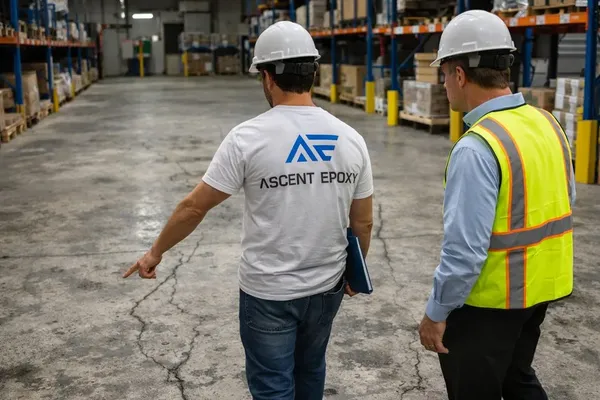
Facility Assessment
~Half dayWe survey the entire facility, identify chemical exposure requirements, map traffic patterns, and document existing damage. Schedule yours free.
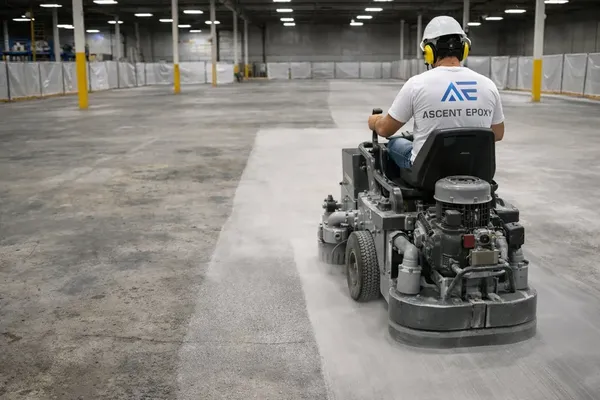
Industrial Slab Preparation
4–8 hrsDiamond grinding and shot blasting across the full surface to create proper adhesion profile. Extended prep time for large industrial slabs ensures no area is missed. All cracks, joints, and damaged sections are repaired before coating.
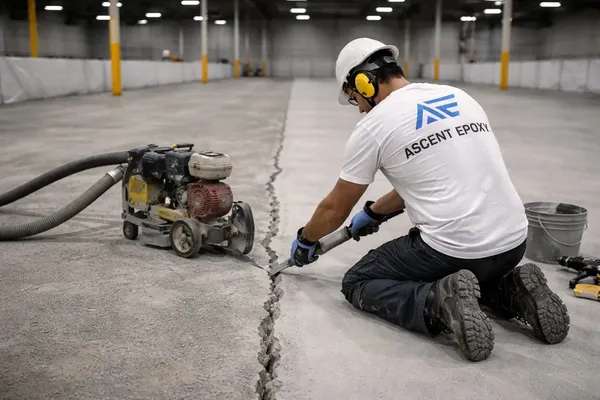
Primer
2–4 hrsIndustrial-grade primer seals the slab and creates a chemical bond between concrete and the epoxy system.
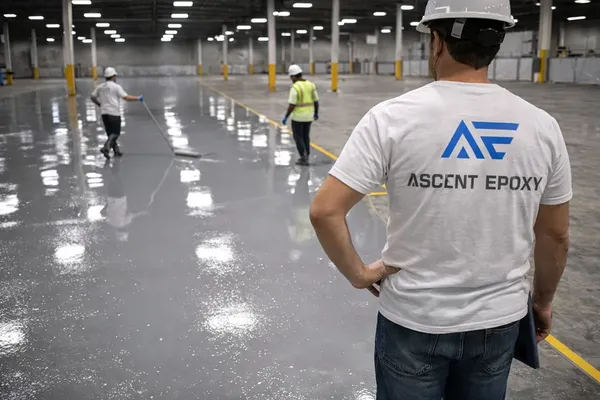
Epoxy System Application
1–3 daysMulti-coat industrial epoxy system applied with chemical-resistant or impact-rated formulations based on your facility's needs. Safety line marking, color-coded zones, and non-slip additives are integrated during this phase.
Curing & Handoff
3–7 daysControlled curing period with environmental monitoring. We verify hardness, adhesion, and chemical resistance before handoff. Your team receives maintenance guidelines specific to your coating system and facility type, plus a written care guide in plain language.
Ready to Start? Step 1 Is Free.
Schedule your no-obligation consultation and see finish samples in your space.
Tampa Bay Industrial Floors We've Finished
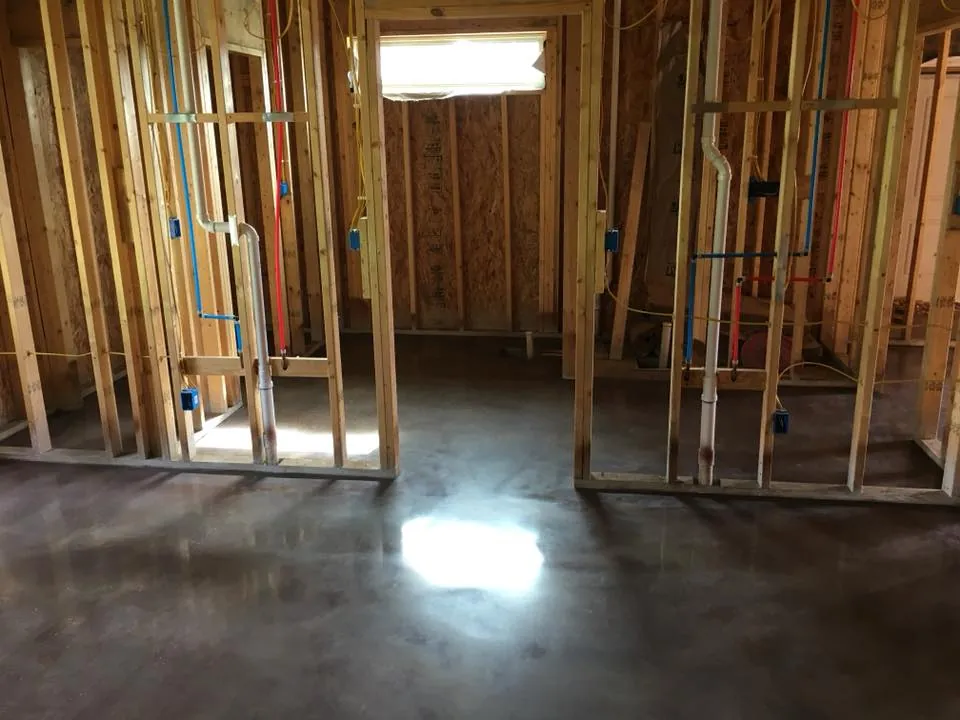
Real installations across port-area warehouses, processing rooms, and fleet bays.
Systems for Tampa Bay's Hardest Rooms
The port-fed freight floor and the chemical-storage bay each fail a different way. Here's the coating each one actually needs.
Warehouse Floor Coatings
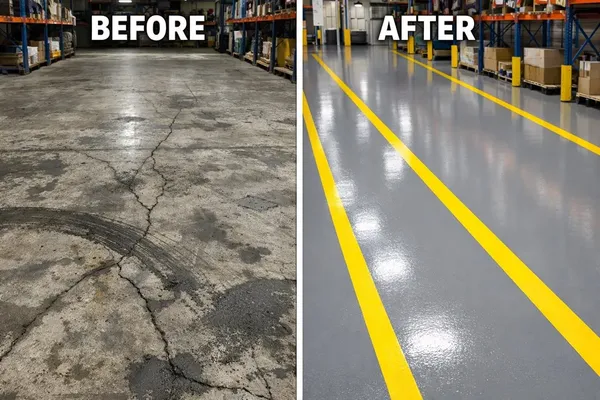
A Tampa distribution warehouse fed by Port Tampa Bay and the airport's cargo apron barely pauses — freight cycles in and out around the clock, reach trucks pivot on the same turns, and racking drives tons onto a handful of square inches. Leave that slab bare under Gulf humidity and a high water table and it will dust, crack, and pit faster than most facility managers expect.
Our warehouse build pairs a high-build epoxy body with an abrasion-resistant topcoat tuned for forklift wear, and we broadcast the aisle striping, staging grids, pedestrian paths, and dock-edge color coding right into the system — not as an afterthought. For the logistics floors around Brandon, Riverview, and Plant City that can't go dark, we coat in zones on a night or weekend schedule so the operation keeps shipping while one bay cures.
Secondary Containment Areas
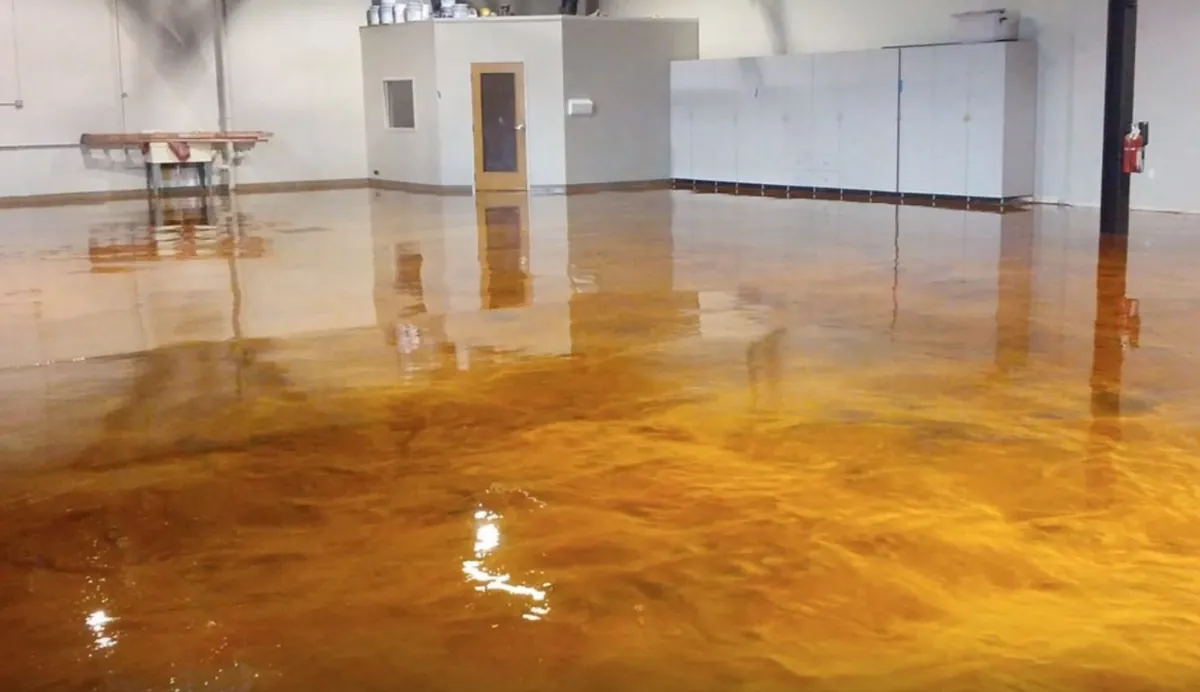
Anything around Hillsborough that holds drummed chemicals, fuels, or solvents — a fuel-storage operation near the port, a chemical distributor, a plating shop, a manufacturing plant — owes a compliant containment floor. It's not a nice-to-have: EPA, OSHA, and Florida's DEP all require it, and on Tampa's sandy fill a spill that reaches the ground has a short trip to the surficial aquifer and the bay.
We build chemical-resistant containment floors with integrated curbing and berms sized to retain 110% of the largest vessel's volume — the federal and state threshold — and we detail the coves and penetrations so nothing escapes through a seam. On Tampa Bay's flat, high-water-table sites that perimeter is the whole point, and the coating itself shrugs off the acids, bases, fuels, and organic solvents stored inside it.
Industrial Epoxy Flooring FAQs — Tampa
Common questions about industrial epoxy flooring for Tampa facilities.
We install industrial epoxy flooring across Hillsborough's Brandon, Plant City, and Riverview logistics corridors — pharma and food-distribution warehouses, auto-parts and 3PL facilities, manufacturing plants, and Port Tampa Bay-fed cargo operations, including:
- Warehouses and distribution centers
- Manufacturing plants
- Chemical processing facilities
- Food and beverage processing plants
- Maintenance bays and service shops
- Control rooms and clean environments
Our systems are engineered to handle the specific demands of each facility type, from chemical resistance in processing plants to impact resistance in high-traffic warehouses.
the Tampa Bay area's regional humidity averaging around 75%, plus a high water table under most Hillsborough slabs, is critical for large industrial floors. Moisture vapor driving up through the slab and getting trapped beneath the coating causes delamination and peeling, and on expansive warehouse floors even small moisture variations can affect thousands of square feet.
We schedule installation windows around optimal humidity conditions to ensure a lasting bond.
Yes. Our industrial epoxy systems are formulated with chemical-resistant resins that withstand exposure to acids, alkalis, solvents, petroleum products, oils, and fuels.
We offer various chemical resistance ratings depending on the specific chemicals present in your facility. Standard epoxy handles oil, grease, and mild chemicals.
Yes. We install OSHA-compliant safety line marking as part of our industrial epoxy flooring systems. This includes:
- Pedestrian walkways
- Forklift traffic lanes
- Hazard zones and restricted areas
- Equipment placement boundaries
- Emergency exit paths
- Color-coded area designations
All markings are applied with durable epoxy paint that bonds directly to the floor system and withstands heavy daily traffic without fading or peeling.
Industrial epoxy installation typically takes 3 to 7 days depending on the facility size, condition of the existing concrete slab, and complexity of the coating system required.
For larger facilities, we offer phased installation that allows you to keep portions of your operation running while we work on other sections. This minimizes downtime and keeps your production schedule on track. We provide a detailed project timeline during the estimate phase so you can plan around the installation.