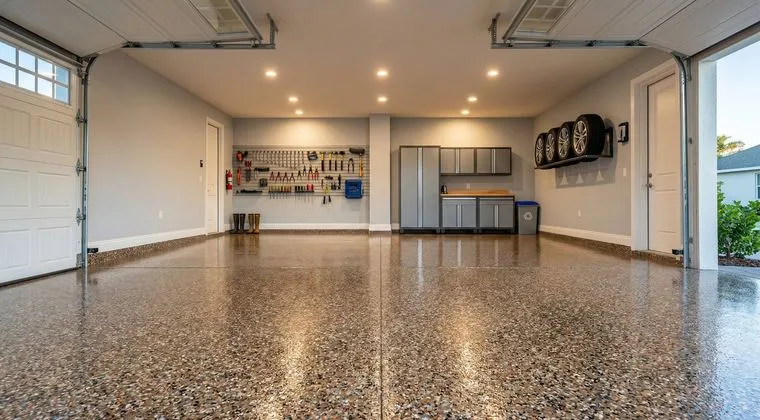
The most durable Tampa floor is usually not epoxy or polyaspartic on its own — it is an epoxy base coat with a polyaspartic topcoat. Epoxy bonds to the slab and builds thickness, polyaspartic takes the daily wear and the Florida sun, and together they outlast either one used alone.
If you have been pricing garage floors in the Tampa Bay area, you have probably run into two camps. One contractor tells you epoxy is the gold standard. The next swears polyaspartic is the only coating that survives Florida. Both are partly right and partly selling you a single layer of a system that works best when you use both. This guide breaks down what each coating actually is, where each one genuinely shines, how they stack up head-to-head, and why the climate here changes the math.
At Ascent Epoxy Tampa, the floor we install on most garage projects is a hybrid: an epoxy base, a decorative flake broadcast, and a UV-stable polyaspartic topcoat. Below, we walk through the reasoning so you can judge a quote for yourself. Want a number for your exact slab? Call (813) 694-5986 for a free estimate, or read on first.
The Short Answer
Here is the honest version, before the detail: epoxy and polyaspartic are not really competitors. They are two different tools that do two different jobs in a floor coating system.
- Epoxy is the base. It bonds aggressively to prepared concrete, builds body and thickness, and creates the foundation the decorative layer sits in. It is strong, affordable, and proven — but it is slow to cure and not naturally UV-stable.
- Polyaspartic is the topcoat. It is a fast-curing, abrasion-resistant, UV-stable wear layer that takes the abuse epoxy was never designed to face in the Florida sun. It is excellent on top, but as a standalone build it is thinner and more expensive per coat.
For a Tampa garage, the floor that lasts longest is almost always an epoxy base under a polyaspartic topcoat. You get the bonding and body of epoxy plus the UV stability, fast cure, and toughness of polyaspartic. The rest of this article explains why, and when a different setup makes sense.
What Epoxy Is — and Where It Shines
Epoxy is a two-part thermoset coating. You mix a resin with a hardener, and a chemical reaction turns the liquid into a hard, plastic-like film bonded to your concrete. It has been the backbone of garage and industrial floor coatings for decades because it does a few things extremely well.
Where epoxy wins
- Adhesion and build. Over a properly diamond-ground slab, epoxy grips hard and lays down a thick, durable film. That thickness is what gives a flake floor its body and lets the color chips lock into the surface.
- Cost. Epoxy is the more affordable layer per square foot, which is why it makes sense as the base of the system rather than the wear layer.
- Proven durability. A well-installed epoxy base resists impact, chemicals, and heavy traffic, and it has the track record to prove it across residential, commercial, and industrial floors.
Where epoxy struggles
Two weaknesses matter a lot in Tampa. First, standard epoxy cures slowly — a full system can need several days before you park a car on it. Second, most epoxy is not naturally UV-stable, so under direct sun it ambers, yellows, and chalks over time. On a garage floor with the bay door open or an interior near big windows, that fading shows. Those two gaps are precisely what a polyaspartic topcoat is built to close.
What Polyaspartic Is — and Where It Shines
Polyaspartic is a type of polyurea — a fast-reacting coating chemistry developed long after epoxy. The aliphatic versions used as floor topcoats were engineered to solve exactly the problems epoxy has outdoors: slow cure and poor UV resistance. It goes down thin but tough, as the wear layer over a base coat.
Where polyaspartic wins
- UV stability. Quality polyaspartic is aliphatic, so it resists the yellowing and chalking that bare epoxy suffers under the Florida sun. It holds its clarity and color far longer outdoors.
- Fast cure. A polyaspartic topcoat can be walk-ready in a few hours and ready for vehicles in roughly a day. That is what makes a one-day garage install possible.
- Abrasion and chemical resistance. As the wear layer, it shrugs off scuffs, hot tires, and cleaning chemicals better than a bare epoxy surface.
- Humidity tolerance. It cures more reliably than slow epoxy in the warm, humid conditions that are normal here for most of the year.
Where polyaspartic struggles
Polyaspartic is thinner per coat and more expensive than epoxy, so building an entire floor out of it alone is costly and gives up the body that an epoxy base provides. It also has a short working time — it cures so fast that it demands an experienced installer who can move quickly and cleanly. That is a feature in skilled hands and a liability in unskilled ones. Used as the topcoat over an epoxy base, though, its strengths land and its weaknesses mostly disappear.
Epoxy vs. Polyaspartic: Head-to-Head
Here is how the two coatings compare on the factors that actually decide how a Tampa floor performs and what it costs. Read this as base-layer epoxy versus a polyaspartic wear layer, not as two ways to build the whole floor.
| Factor | Epoxy | Polyaspartic |
|---|---|---|
| Cure time | Slow — several days to fully cure | Fast — walk-ready in hours, vehicles in ~1 day |
| UV stability / ambering | Ambers and chalks in sun unless specially formulated | UV-stable; resists yellowing |
| Humidity tolerance | Sensitive; can blush or cloud in high humidity | Cures reliably in warm, humid conditions |
| Abrasion / chemical resistance | Good | Excellent as a wear layer |
| Typical cost | Lower per coat — the affordable base | Higher per coat — the premium topcoat |
| Look / finish | Thick build; great body for flake and metallic | High clarity and gloss; thin wear layer |
| Ideal use | Base coat that bonds and builds thickness | UV-stable topcoat that takes daily wear |
Notice that almost every row points the same direction: epoxy is the better base, polyaspartic is the better topcoat. That is not a coincidence — it is why the best floors use them as a team.
Not Sure Which System Fits Your Space?
Tell us about your slab and how you use the space. We will recommend the right coating system and give you a real number, free.
Why Polyaspartic Topcoats Matter in Tampa
National coating advice is written for a dry, temperate slab. Tampa is neither. Four local conditions push the topcoat decision firmly toward polyaspartic, and they are the same conditions that make our floors fail when the topcoat is wrong.
Humidity around 75 percent
Tampa humidity averages roughly 75 percent, and standard slow-cure epoxy can blush, cloud, or fail to cure cleanly in those conditions. Polyaspartic cures faster and more reliably in warm, humid air, so the wear layer sets the way it should instead of hazing during cure.
Sub-tropical heat and fast cure
Year-round heat keeps slab temperatures high and shortens working windows. Polyaspartic is built for that pace — it cures fast, which is both why it tolerates the heat and why a skilled crew can finish a garage in a single day. It is the difference between waiting most of a week to park and getting your garage back the next day.
Strong UV and ambering
This is the big one. Florida's sun ambers and chalks coatings that are not UV-stable, and it does it quickly on a garage floor with the bay door open and on any sun-exposed interior. Bare epoxy yellows. A UV-stable polyaspartic topcoat is what keeps a Tampa floor looking new instead of faded, which is exactly why we spec it as standard here.
Coastal salt air
Properties closer to the water face salt-air exposure that degrades coatings at edges and open bays over time. A tough, UV-stable polyaspartic wear layer holds up better against that exposure than a bare epoxy surface, which matters most on open-bay garages and waterfront homes across Hillsborough and Pasco.
None of this means epoxy is bad. It means the topcoat has a job to do in this climate that epoxy alone was not designed for. Moisture from below is a separate problem — if you want the full picture on why floors fail here and the test that prevents it, read our Tampa epoxy moisture failure guide.
The Hybrid System We Recommend
For most Tampa garages, the floor that balances looks, durability, and climate protection is a three-part hybrid. It uses each coating for what it does best.
- Epoxy base coat. After a full diamond grind and any needed moisture mitigation, an epoxy base goes down to bond to the slab and build thickness.
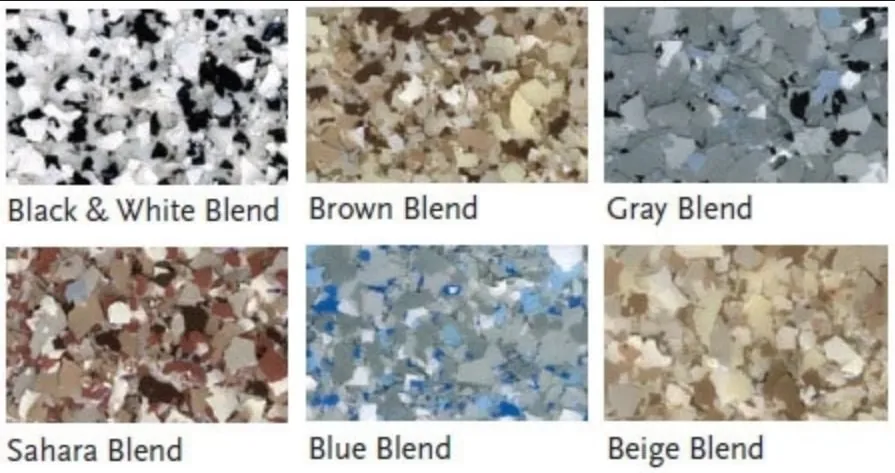
- Flake broadcast. Vinyl color chips are broadcast into the wet base to create a textured, multicolor finish that hides marks and adds grip.
- Polyaspartic topcoat. A UV-stable polyaspartic clear coat seals the flake, takes the daily wear, resists yellowing in the sun, and cures fast.
That polyaspartic topcoat is an upgrade over a plain epoxy topcoat, and it adds roughly $1.50 to $3.00 per square foot for the same flake spec. In Tampa's heat, humidity, and UV, that upgrade is the difference between a floor built for this climate and one that simply was not. It is the configuration we recommend most often, and it is what most homeowners here end up choosing once they understand why.
Want to see how the finishes and topcoats actually look on your size of space? You can preview options and get a Tampa price range in our Floor Studio, then talk specifics. For where the dollars land by finish, see our Tampa epoxy flooring cost guide.
Which One Should You Choose?
If you take nothing else from this article: in most cases you should not choose one coating, you should choose a system. Here is how the decision shakes out by use case.
- A typical Tampa garage: Epoxy base + flake + polyaspartic topcoat. This is the all-around sweet spot for looks, durability, and UV and humidity protection.
- A sun-exposed or open-bay garage: Same hybrid, and the polyaspartic topcoat matters even more. UV stability is doing real work here.
- You need the floor back fast: A polyaspartic-topped system, where the fast cure lets you park sooner — often the next day.
- A tight-budget utility space out of the sun: An epoxy system can be enough on its own, but you give up the UV and abrasion margin that protects the floor long term.
- Heavy traffic or a commercial space: The polyaspartic wear layer earns its keep on a commercial floor, where abrasion and cleaning chemicals are constant.
The honest framing is the same one Duane gives in person: epoxy and polyaspartic are partners, not rivals. The right call for your floor depends on how you use the space and how much sun it sees — and for most people in the Tampa Bay area, the hybrid wins.
Frequently Asked Questions
Is polyaspartic better than epoxy?
Neither is strictly better — they do different jobs. Epoxy is the stronger base layer that bonds to and builds thickness on your concrete. Polyaspartic is the tougher, UV-stable topcoat that takes the daily abuse and resists yellowing. The most durable floor in Tampa usually uses both: an epoxy base with a polyaspartic topcoat, not one or the other.
Can you put polyaspartic over epoxy?
Yes, and it is the configuration we recommend most in Tampa. The epoxy base coat does the bonding and body-building on the slab, then a polyaspartic topcoat is applied over it for UV stability, abrasion resistance, and a fast cure. Putting polyaspartic over epoxy gives you the best traits of each layer.
Does polyaspartic yellow in the sun?
Quality polyaspartic is aliphatic and UV-stable, so it resists the yellowing and chalking that plagues bare epoxy in the sun. That UV stability is exactly why it matters on a sun-exposed Tampa garage floor or any interior near big windows. Standard epoxy, by contrast, ambers noticeably under Florida UV.
Is a polyaspartic topcoat worth the extra cost in Tampa?
In Tampa's heat, roughly 75 percent humidity, and strong UV, a polyaspartic topcoat is worth it for most floors. The upgrade adds about $1.50 to $3.00 per square foot over a plain epoxy topcoat, and in this climate it is the difference between a floor that holds its color and one that ambers, chalks, or hazes within a year or two.
Which one cures faster?
Polyaspartic cures dramatically faster. A polyaspartic topcoat can be walk-ready in a few hours and ready for vehicles in about a day, while a full epoxy system typically needs several days to fully cure before you park on it. The fast cure is why polyaspartic is popular for one-day garage installs.
How long does each coating last?
With proper slab prep, a well-installed epoxy floor lasts many years, and a polyaspartic topcoat extends that lifespan by taking the abrasion and UV exposure that would otherwise wear the floor. In Tampa, the hybrid epoxy-base-plus-polyaspartic-topcoat system is the longest-lasting setup because each layer protects the other.
Get Your Free Tampa Quote
The right coating for your floor comes down to how you use the space, how much sun it sees, and what your slab needs underneath. At Ascent Epoxy Tampa, every estimate starts with a real look at your concrete, moisture testing, and an honest conversation about whether a hybrid epoxy-and-polyaspartic system or a simpler build makes sense for you. No pressure, no bait-and-switch, just a clear recommendation and a system built for the Tampa Bay area.
Ready to start? Call us at (813) 694-5986 or request a free quote online. We serve Tampa, Brandon, Riverview, Carrollwood, Wesley Chapel, Westchase, Lutz, Land O' Lakes, and the surrounding communities across Hillsborough and Pasco County.
Related Articles
How Much Does Epoxy Flooring Cost in Tampa? (2026 Guide)
Real 2026 Tampa prices by finish plus a typical 2-car garage total.
Why Epoxy Floors Fail in Tampa — and the Moisture Test That Prevents It
The high water table, MVT testing, and what to ask before you sign.
Epoxy Floor Maintenance in Tampa
Keep your floor looking new with the right cleaning routine.