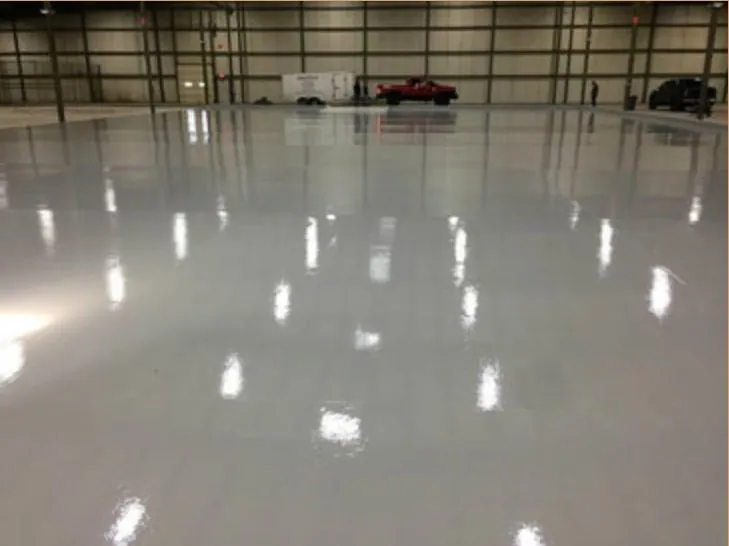
Commercial epoxy flooring gives Tampa businesses a durable, seamless, easy-to-sanitize, slip-rated floor that stands up to forklifts, foot traffic, spills, and constant cleaning. The right system depends on your industry — a warehouse, a restaurant kitchen, a retail showroom, and an auto shop each call for a different build.
If you run a facility in the Tampa Bay area, the floor is working harder than almost any other surface in the building. Pallet jacks roll over it, grease and chemicals hit it, health inspectors look at it, and customers form an impression the moment they walk in. A coated concrete floor is not a cosmetic upgrade for a commercial space — it is infrastructure. This guide breaks down why epoxy makes sense for Tampa businesses, which system fits each industry, what it costs, and how a good installer keeps your doors open while the work gets done.
At Ascent Epoxy Tampa, we install commercial and industrial floor systems across Hillsborough and Pasco. Whether you are spec'ing a new warehouse in Brandon or recoating a worn kitchen in Carrollwood, the sections below will help you walk into the conversation knowing what to ask for. Want a number for your exact space? Call (813) 694-5986 for a free walkthrough, or read on first.
The Short Answer
Commercial epoxy and polyaspartic coatings turn a bare concrete slab into a single, seamless, chemical-resistant surface with no grout lines, no seams, and no porous spots for bacteria or spills to hide in. That makes the floor easy to clean, safe to walk on when a slip-rated texture is added, and tough enough to take years of heavy traffic without breaking down.
There is no single "commercial epoxy" floor, though. A high-bay distribution warehouse, a busy commercial kitchen, a boutique retail showroom, an auto repair bay, and a medical clinic all have different demands — thermal shock, impact, chemical exposure, slip safety, static control, appearance. The system you install should be matched to the work the floor actually does. Because of that, and because Tampa's high water table means moisture has to be tested first, commercial projects are almost always quoted after an on-site walkthrough rather than off a flat price list.
Why Tampa Businesses Choose Epoxy
The reasons a Tampa business invests in a coated floor come down to five things: how long it lasts, how clean it stays, how safe it is, how it looks, and what it returns over time.
Durability Under Real Traffic
Bare concrete dusts, cracks, and stains under the kind of load a commercial space puts on it. A properly built epoxy or polyaspartic system bonds to the slab and creates a hard wear layer that shrugs off forklift wheels, dropped tools, dragged pallets, and rolling racks. Where an uncoated floor would pit and spall, a coated one keeps its surface, which is why warehouses and shops that run heavy equipment all day rely on it.
Hygiene and a Seamless Surface
A coated floor has no grout lines, no seams, and no open pores. Spills wipe up instead of soaking in, and there is nowhere for grease, mold, or bacteria to take hold. For any business that gets inspected — food service, healthcare, food production — a seamless, sanitary floor is not a luxury, it is part of staying compliant. In Tampa's humidity, a sealed surface that does not trap moisture also helps keep mold off the floor itself.
Safety and Slip Resistance
A wet floor is a liability. Commercial systems can be built with broadcast aggregate or an anti-slip additive in the topcoat to give a defined traction profile, so a kitchen line, a wash bay, or a loading dock stays walkable when it gets wet. That traction can be tuned to the space — aggressive where water and grease are constant, lighter where a smooth, easy-to-mop surface matters more.
Looks and Brand Impression
A clean, glossy, uniform floor reads as a well-run operation. In a showroom or retail space it can be tinted, flaked, or finished in a metallic design that becomes part of the brand. Even in back-of-house areas, a sharp floor signals to staff and inspectors that the space is maintained. First impressions in a customer-facing business start at the ground.
Long-Run ROI
The case for a coated floor is rarely about the cheapest option today — it is about cost over years. A well-installed commercial floor commonly lasts a decade or more, resists the damage that forces concrete repairs, and cuts cleaning time because there are no seams or porous spots to scrub. For a facility owner, that combination of long life and low upkeep is usually what makes the number pencil out. Our guide on how long an epoxy floor lasts in Tampa covers the lifespan math in more detail.
Epoxy by Industry
The single most useful way to think about a commercial floor is by the work it has to do. Here is how the right system shifts across the businesses we coat most often in the Tampa Bay area.
Warehouses & Distribution
Warehouses live and die by abrasion and impact resistance. Forklifts, pallet jacks, and loaded racks pound the floor continuously, so the priority is a tough wear layer and, often, line striping for traffic lanes and safety zones. A solid-color or flake epoxy with a hard polyaspartic topcoat handles most distribution floors well. On open-bay facilities near the water, salt air pushes the spec toward a thicker, more chemically resistant build at the edges and dock doors where exposure is worst.
Restaurants & Commercial Kitchens
Kitchens are the hardest commercial environment for a floor: standing water, hot oil, grease, daily caustic cleaning, and thermal shock from hot water and steam. This is where a quartz-broadcast system earns its place, because it is seamless and sanitary. Slip resistance is mandatory on a kitchen line, and the seamless surface is what keeps a space inspection-ready. This is almost always a walkthrough-quoted system because health-code requirements and layout drive the build.
Retail & Showrooms
Retail floors carry foot traffic and a brand at the same time. Here appearance matters as much as durability, so flake and metallic systems are popular — a flake floor hides scuffs and wear in a busy aisle, while a metallic design turns the floor into a feature in a showroom or boutique. The topcoat still needs to resist wear and stay glossy, but the conversation leans toward color, finish, and the look you want customers to walk in on.
Auto & Mechanical Shops
Repair bays face hot-tire pickup, oil, brake fluid, solvents, and the weight of vehicles and jacks. A flake system with a chemical-resistant polyaspartic topcoat is the workhorse here: it resists staining from automotive fluids, cleans up easily, and adds the grip a shop floor needs when it gets slick. The flake also hides the inevitable marks of a working bay, so the floor still looks sharp after years of use.
Medical & Clinical
Clinics, labs, and treatment spaces demand a floor that is seamless, sanitary, and easy to disinfect, with coved bases that eliminate the dirt-trapping corner where wall meets floor. Quartz and high-build epoxy systems fit here. Cleanliness and infection control set the spec, and the seamless surface is what makes daily disinfecting effective.
Not Sure Which System Fits Your Facility?
Tell us about your space and how it is used. We will recommend the right system and give you a real number, free.
Choosing the Right System
Every commercial system trades off durability, slip resistance, chemical tolerance, and cost differently. The table below summarizes the three builds we install most often and where each one fits. Use it as a starting point — the final spec is set after we see your slab and how the space is used.
| System | Best Use | Durability | Slip Resistance | Notes |
|---|---|---|---|---|
| Solid Color Epoxy | Light commercial, storage, back-of-house | Good | Low (additive optional) | Budget entry point; clean, glossy, easy to mop |
| Flake / Chip | Retail, auto shops, general commercial | Very good | Medium | Hides wear and marks; broad color range |
| Quartz Broadcast | Kitchens, clinics, food service, locker rooms | Excellent | High | Thick, hard, sanitary; usually walkthrough-quoted |
For most general commercial and retail floors, a flake system with a polyaspartic topcoat is the all-around value. For kitchens and food service, quartz is the durable, sanitary, slip-rated answer. If you are weighing a coating against grinding and sealing the slab instead, our polished concrete page covers that alternative.
The Tampa Factor
A commercial floor that performs in a dry inland market can fail fast in the Tampa Bay area if the install ignores local conditions. Three of them shape nearly every commercial spec we write here.
Moisture Mitigation on Commercial Slabs
Tampa sits on a high water table, and commercial slabs are large — which means a lot of surface area for moisture vapor to push up through and delaminate a coating from underneath. On a warehouse or kitchen floor, a moisture failure is not a small patch; it can take out a whole bay. A professional installer tests the slab before quoting, and when transmission runs high a moisture-mitigation primer is added, roughly $1.50 to $3.00 per square foot, with the moisture test itself running $200 to $400. On a commercial job, that prep is non-negotiable insurance against a floor that bubbles within months.
Salt Air on Open-Bay Facilities
Coastal Hillsborough properties face salt-air exposure that degrades coatings at edges, dock doors, and open bays over time. It is a minor factor on a sealed interior floor but a real one on warehouses and open-bay facilities near the water, where the spec moves toward thicker, more chemically resistant systems and UV-stable topcoats at the exposed perimeter. If your facility opens to the outdoors, expect that to show up in the recommendation.
Fast-Cure Polyaspartic to Limit Downtime
Tampa humidity averages around 75 percent and year-round heat keeps slab temperatures high, which can make standard slow-cure epoxy blush or cure poorly. Polyaspartic coatings tolerate that humidity, resist yellowing under the sub-tropical sun, and — critically for a business — cure fast enough to return a space to service in hours instead of days. That fast cure is the lever that lets us coat a working facility without shutting it down, which is the whole game for a commercial owner.
What Commercial Epoxy Costs & What Drives It
Commercial pricing works on the same per-square-foot logic as residential, but the system range is wider and the variables matter more. As a starting reference, here are the 2026 Tampa ranges by system, installed.
| System | Cost Per Sq Ft (installed) |
|---|---|
| Solid Color Epoxy | $4–$7 |
| Flake / Chip | $5–$9 |
| Metallic | $9–$14 |
| Quartz | $10–$14 |
Commercial and quartz systems are usually quoted after a walkthrough because the variables below move the number too much to price blind:
- Square footage. Larger floors lower the per-square-foot rate as fixed mobilization and prep costs spread across more area, but they raise the total project number.
- Slab condition. Cracks, spalling, old coatings, oil contamination, and uneven surfaces all add prep. A clean, sound slab grinds and coats fast; a damaged or contaminated one needs repair and remediation first.
- System and build. A simple solid-color floor is a fraction of the cost of a multi-coat quartz clinic floor. The system you need is set by the work the floor does, not by preference alone.
- Moisture mitigation. When the slab tests wet, a mitigation primer adds about $1.50 to $3.00 per square foot, plus $200 to $400 for the test. On a large commercial floor that is a meaningful line item — and a necessary one in Tampa.
For a sense of how the underlying finish ranges break down, our Tampa epoxy flooring cost guide walks through the per-finish numbers in detail.
Minimizing Downtime
For most commercial owners, the real question behind "how much" is "how long will I be closed." A floor that costs you a week of revenue can cost more in lost business than the install itself. A good commercial installer plans the job around your operation, not the other way around.
There are two levers that keep a business running through a floor install:
- Fast-cure polyaspartic coatings. Where a traditional epoxy needs days to cure between coats, a polyaspartic system can be walked on within hours and back in full service quickly. In Tampa's heat and humidity it is also the more reliable cure, so the fast turnaround does not come at the cost of a weaker floor.
- Phased and off-hours installs. A large floor can be coated in sections so part of the facility stays open while another part is being done. Overnight and weekend work keeps a retail or food-service space running during business hours. For a warehouse, sequencing by zone lets operations continue around the work.
The right downtime plan depends entirely on your layout, your hours, and how the space is used — which is exactly why a commercial quote starts with a walkthrough rather than a phone estimate. We map the install to your schedule before any product goes down.
Frequently Asked Questions
How much does commercial epoxy flooring cost?
Commercial epoxy flooring in Tampa generally runs $4 to $14 per square foot installed, depending on the system. Solid-color floors start around $4 to $7, flake systems run $5 to $9, and high-performance quartz runs $10 to $14. Because square footage, slab condition, and the system itself vary so much between facilities, commercial and quartz projects are usually quoted after a walkthrough.
How long does a commercial epoxy floor take to install?
A typical commercial install takes two to five days, depending on square footage, slab prep, and the number of coats. A fast-cure polyaspartic system can shorten that timeline and allow foot traffic within hours of the final coat, which is why it is the go-to choice when downtime has to be minimized.
Can you install epoxy without closing my business?
In many cases, yes. We frequently phase commercial installs by section, work overnight or on weekends, and use fast-cure polyaspartic coatings so an area can return to service quickly. The right approach depends on your layout and hours, which is one reason we always start with a walkthrough.
What is the best floor for a commercial kitchen?
For most Tampa commercial kitchens, a quartz-broadcast system is the best choice. It is seamless, sanitary, and slip-rated. The final spec is set after a walkthrough of your space and health-code requirements.
How long does a commercial epoxy floor last?
A professionally installed commercial epoxy or polyaspartic floor commonly lasts 10 to 20 years under normal traffic when the slab is properly prepped and moisture is mitigated. High-impact industrial environments fall at the lower end of that range, while light commercial spaces can run longer with routine maintenance.
Does commercial epoxy need moisture mitigation in Tampa?
Often, yes. Tampa's high water table pushes moisture vapor up through commercial slabs, and on a large floor that vapor can delaminate a coating from underneath. We test the slab before quoting, and when transmission is high a moisture-mitigation primer is added at roughly $1.50 to $3.00 per square foot, with the test itself running $200 to $400.
Get Your Free Tampa Quote
This guide gives you the systems and the reasoning, but the only way to get an accurate number for a commercial floor is to have your slab and your operation evaluated in person. At Ascent Epoxy Tampa, every commercial estimate starts with a walkthrough, moisture testing, and an honest conversation about which system fits your industry, your traffic, and your downtime tolerance. No pressure, no bait-and-switch, just a clear plan and a floor built for the Tampa Bay area.
Ready to start? Call us at (813) 694-5986 or request a free quote online. We serve Tampa, Brandon, Riverview, Carrollwood, Wesley Chapel, Westchase, Lutz, Land O' Lakes, and the surrounding communities across Hillsborough and Pasco County. Want to picture your floor first? Try the Floor Studio to preview finishes and colors before you call.
Related Articles
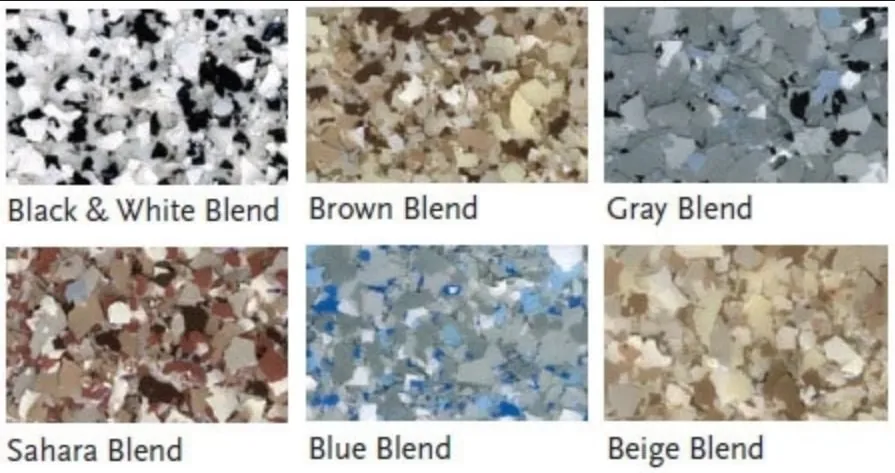
How Much Does Epoxy Flooring Cost in Tampa? (2026 Guide)
Real 2026 Tampa prices by finish plus a typical 2-car garage total.
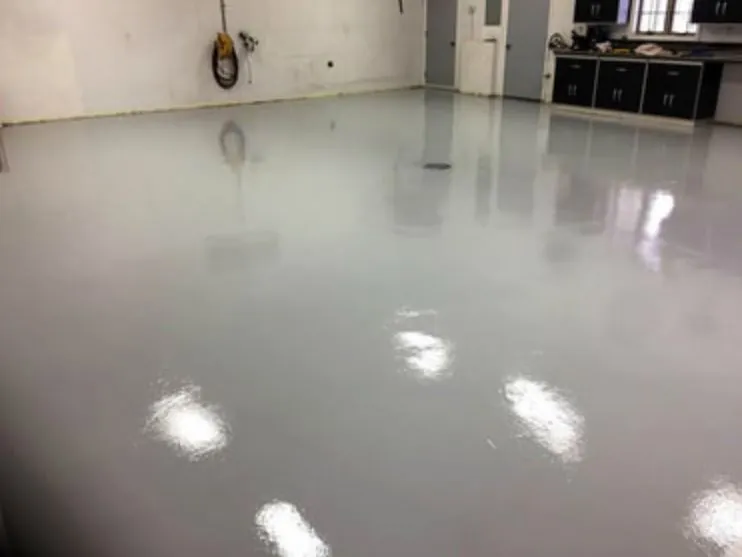
How Long Does an Epoxy Floor Last in Tampa?
Realistic lifespans and what makes a Tampa floor last.
Metallic Epoxy Flooring in Tampa
Metallic, flake, and quartz design options compared.